2.1 Purpose
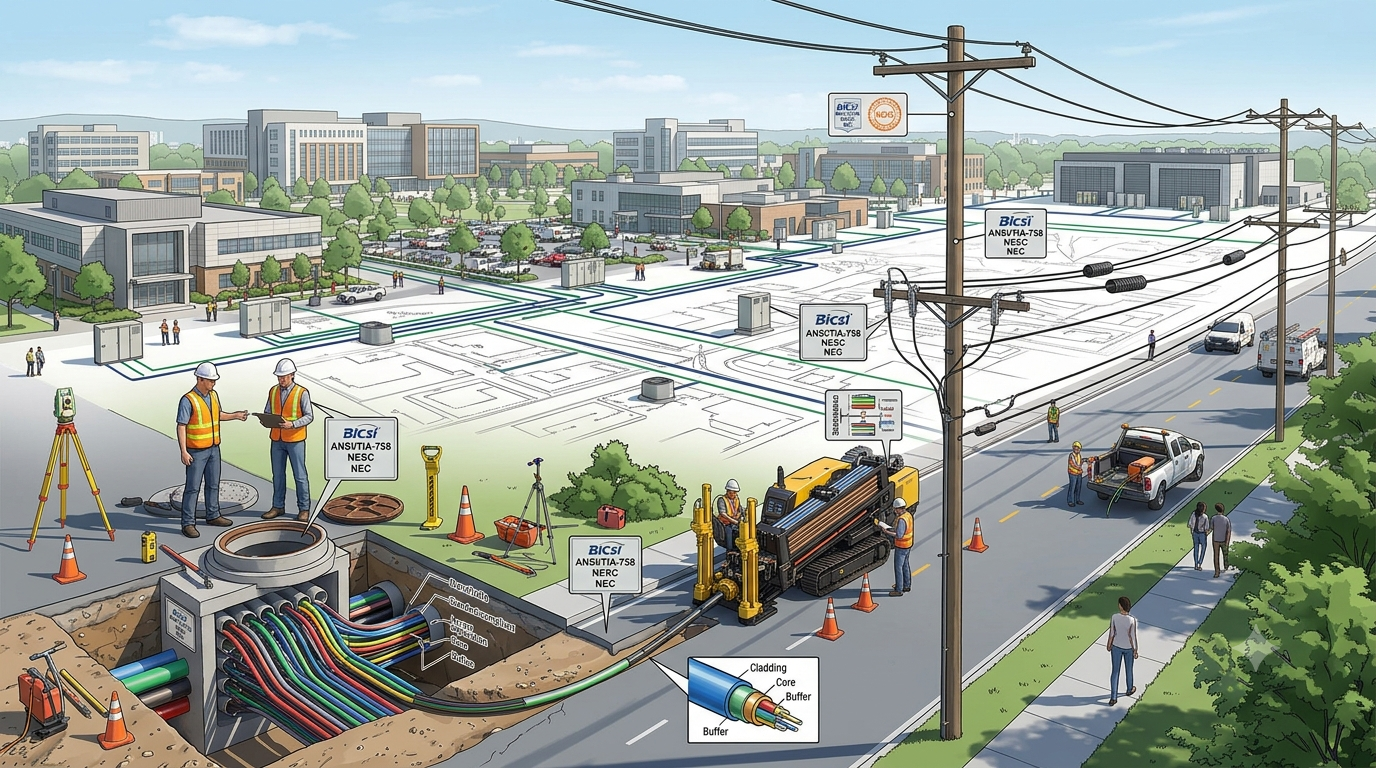
Outside plant (OSP) telecommunications infrastructure is subject to a layered regulatory and standards environment that simultaneously addresses life safety, system performance, environmental protection, and operational reliability. The OSP Designer, RCDD, ICT consultant, or telecommunications engineer must understand both the mandatory requirements imposed by law and the consensus standards and best practices that define professional competence.
This chapter establishes the hierarchy of applicable documents, identifies the primary authorities relevant to campus, carrier, utility, and government networks, and provides guidance on conflict resolution and documentation of compliance. Failure to correctly apply this framework is a common source of project delays, change orders, regulatory citations, and long-term liability.
2.2 Hierarchy of Requirements
Requirements governing OSP work are applied in the following order of precedence:
- Statutory and regulatory requirements — Federal, state, and local laws and codes that carry the force of law. These include the National Electrical Safety Code (NESC), National Electrical Code (NEC), Occupational Safety and Health Administration (OSHA) regulations, environmental statutes, and local ordinances enforced by authorities having jurisdiction (AHJs).
- Project-specific contractual and owner requirements — Specifications issued by the facility owner, carrier, utility, or government agency that may exceed minimum code requirements.
- Consensus standards — Voluntary industry standards developed under ANSI-accredited processes (TIA, BICSI, ICEA, IEEE, etc.). When referenced in contract documents or adopted by an AHJ, these standards become mandatory for the project.
- Industry best practices and recommended methods — Guidance published by BICSI (OSPDRM and G-series standards), the Fiber Optic Association (FOA), manufacturers, and recognized technical references. These establish the expected standard of care for competent professionals even when not explicitly required by code.
Where conflicts exist, the more stringent requirement generally governs unless the AHJ issues a formal variance or interpretation. The Designer must document the basis for any design decision that involves interpretation of conflicting requirements.
2.3 Primary Codes and Safety Regulations
IEEE C2 – National Electrical Safety Code (NESC), 2023 Edition The NESC is the foundational safety code for outdoor electrical supply and communications facilities. It addresses clearances, strength and loading of structures, grounding methods, work rules, and underground installations. Parts 2 (Overhead Lines) and 3 (Underground Lines) are particularly relevant to OSP telecommunications. The 2023 edition incorporates updated storm-loading criteria, including provisions applicable to certain island and coastal regions. Joint-use arrangements between power and communications facilities are heavily regulated under NESC rules. Compliance is typically enforced by state public utility commissions or equivalent AHJs.
NFPA 70 – National Electrical Code (NEC) The NEC primarily governs premises wiring but contains critical provisions affecting OSP at building entrances, including limitations on the length of unlisted outside plant cable that may enter a building, bonding and grounding of metallic members, firestopping, and separation from power circuits. Recent editions continue to refine requirements for communications circuits entering buildings and for optical fiber cables.
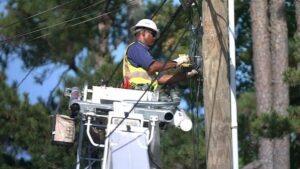
OSHA Regulations (29 CFR 1910 and 1926) OSHA standards address worker safety during construction and maintenance of telecommunications facilities. Key sections include 29 CFR 1910.268 (Telecommunications), personal protective equipment requirements, excavation safety, and fall protection. These rules apply to all employers and are independent of design standards.
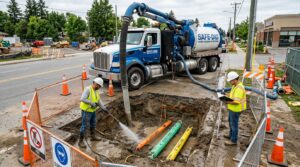
Environmental and Land-Use Regulations Federal statutes (Clean Water Act, Endangered Species Act, National Environmental Policy Act, and others), state environmental codes, and local zoning or historic-preservation ordinances frequently affect route selection, trenching methods, and restoration requirements. Wetland permits, storm-water pollution prevention plans, and cultural-resource clearances are common on campus and government projects.
2.4 Primary Industry Standards
BICSI Standards and Manuals BICSI publications constitute the most comprehensive body of OSP-specific guidance currently available:
- BICSI G1-17 – ICT Outside Plant Construction and Installation: General Practices (under continuous revision)
- BICSI G2.1-22 – Pole Setting, Anchoring, and Guying
- BICSI G2.2-22 – Aerial Cable Installation
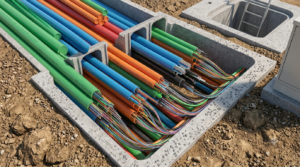
- BICSI G3-2026 – ICT Outside Plant Construction and Installation: Underground Facilities and Pathways – General Practices
- BICSI G4-23 – Direct Buried Facilities
- Outside Plant Design Reference Manual (OSPDRM), 6th Edition
These documents provide both mandatory (“shall”) requirements and advisory (“should”) recommendations. They are written for installers, designers, project managers, and AHJs and are widely referenced in professional specifications.
ANSI/TIA-758-B – Customer-Owned Outside Plant Telecommunications Infrastructure Standard This standard establishes minimum requirements for pathways, spaces, cabling, connecting hardware, and bonding/grounding systems in customer-owned campus environments. It remains the primary TIA reference for OSP. A revision (758-C) has been under development; designers should verify the current status at the time of project initiation.
Related TIA Standards
- TIA-568 series (cabling components and performance)
- TIA-569 (pathways and spaces – primarily premises but with OSP interfaces)
- TIA-606 (administration)
- TIA-607 (bonding and grounding)
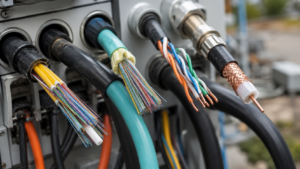
ICEA Standards ANSI/ICEA S-87-640 (Optical Fiber Outside Plant Communications Cable) and related ICEA documents define cable construction, mechanical, and environmental performance requirements for outdoor applications.
FOA Guidance The Fiber Optic Association’s Standard for Installing Fiber Optic Cable Plants and associated reference guides provide practical installation and testing methods widely accepted in the industry.
2.5 Application by Network Type
Campus Networks Primarily governed by customer-owned standards (TIA-758, BICSI G-series, OSPDRM). Building entrance requirements fall under the NEC. Aesthetic, future-capacity, and single-owner coordination considerations often drive designs beyond minimum code.
Carrier Networks Subject to NESC, state utility commission rules, and carrier-specific construction practices. Joint-use and make-ready processes are heavily regulated. Long-span aerial and high-count fiber designs must satisfy both safety and transmission performance criteria.
Utility Networks NESC requirements are particularly stringent because of proximity to power facilities. Induction, ground-potential rise, and bonding/isolation issues require specialized analysis. Many utilities maintain internal standards that incorporate or exceed industry documents.
Government and Defense Networks In addition to the codes and standards listed above, projects frequently reference Unified Facilities Guide Specifications (UFGS), agency-specific criteria, and enhanced security requirements (including Protected Distribution Systems). Multi-agency review processes are common.
2.6 Authorities Having Jurisdiction and Coordination
The AHJ may be a municipal building department, state public utility commission, federal agency, military installation commander, or combination of entities. Early identification of all AHJs and their specific adoption of codes and amendments is essential. Pre-application meetings and formal interpretations should be documented.
Right-of-way and joint-use coordination often involves multiple utilities, municipalities, and private property owners. The national “Call Before You Dig” (811) system and state-specific one-call laws impose legal obligations on excavators and designers.
2.7 Documentation of Compliance
Professional practice requires that design documents explicitly reference the applicable codes and standards, state the edition year, and identify any intentional deviations or variances. Construction specifications should incorporate the relevant BICSI G-series standards by reference and require contractor adherence to NESC work rules and OSHA requirements. As-built documentation must record the final installed condition relative to the approved design and applicable standards.
2.8 Summary
Competent OSP design rests on a clear understanding of the hierarchical relationship among safety codes, consensus standards, and professional best practices. The Designer must maintain current knowledge of the NESC, NEC, BICSI G-series and OSPDRM, TIA-758, and the specific regulatory environment of each project. Subsequent chapters apply these requirements to the detailed design of pathways, spaces, cabling, and support systems.