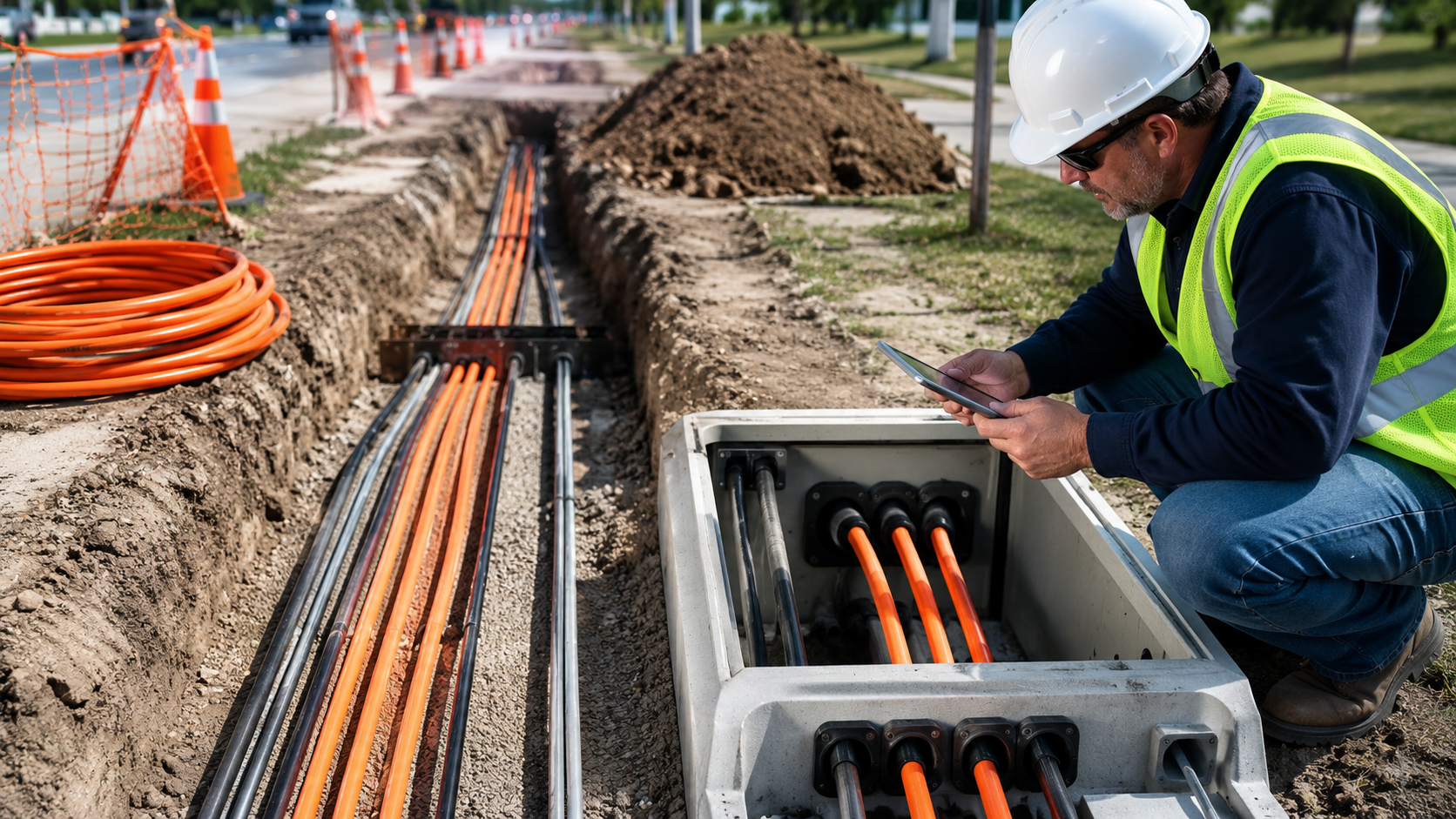
As broadband expansion programs push crews into denser rights-of-way and tighter construction windows, the gap between “installed” and “installed correctly” has become the costliest variable in fiber-to-the-x (FTTx) outside plant (OSP) work. A conduit that passes visual inspection but fails a mandrel test, or a splice that reads clean on one wavelength but hides a macrobend, can turn into a multi-week remediation job long after the crew has moved on. That’s the gap a 10-point field auditing checklist is designed to close — giving inspectors a single sign-off standard for duct and fiber infrastructure before it’s buried, paved over, or spliced into service.
Why Field Audits Are Getting More Rigorous
OSP construction has historically leaned on visual sign-off and spot checks. But as buildouts scale, operators and municipalities are pushing for documented, repeatable QA — partly to protect long-term network reliability, and partly because rework on buried infrastructure is exponentially more expensive than a five-minute test performed before backfill. The checklist reflects that shift: it front-loads verification into the construction phase rather than leaving it to post-turnup troubleshooting.
Conduit Integrity Comes First
Two checks anchor the physical conduit work. The mandrel test requires HDPE conduit to pass a probe sized to 80–85% of the internal diameter, confirming there’s no crushing, ovality, or kinking that would snag fiber during jetting. The pressure decay test follows, holding 100–150 PSI for five minutes with less than a 10% pressure drop — a simple but effective way to catch joint failures or micro-fractures before they become inaccessible. Together, these two tests are the difference between a conduit system that’s “installed” and one that’s actually jetting-ready.
Sealing, Grounding, and the Tracer Wire Requirement
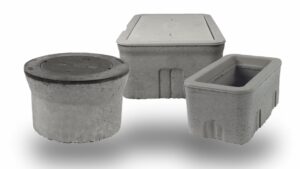
Ingress sealing at handholes, manholes, and building entries — using mechanical duct plugs or gas/water-rated expanding foam — protects against water intrusion and gas migration, both of which can silently degrade a system for years before symptoms appear.
Because HDPE conduit is non-conductive, locating it later requires a continuous tracer wire, typically 12 AWG copper-clad steel, run alongside the duct. The checklist calls for continuity testing end-to-end, plus periodic grounding — bonding the wire to an approved ground system at intervals no greater than 1,000 feet using corrosion-resistant clamps. Skipping this step doesn’t just create a locate problem; it can leave a stray current path with no dissipation route.
Handhole Practices and Labeling Discipline
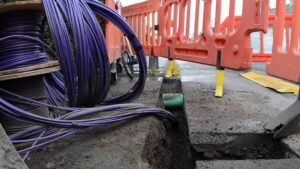
Inside handholes, slack storage matters as much as the splice itself. Fiber slack loops need to sit in snowshoes or expansion brackets that respect the cable’s minimum dynamic bend radius — a detail that’s invisible until attenuation testing flags a problem months later. Labeling ties directly into this: TIA-606 compliant tagging (cable ID, destination, and owner) on weather-resistant, non-corrosive markers is what turns a handhole from a mystery box into a serviceable asset for the technician who opens it next — often years later, and often not from the original crew.
Proving the Optical Path
Civil and grounding checks protect the infrastructure; the OTDR verification step proves the fiber itself performs. Fusion splices are expected to measure below 0.05 dB loss, with bidirectional testing at 1310, 1550, and 1625 nm to rule out macrobends that a single-direction, single-wavelength test could miss entirely. This is the point in the checklist where “the duct is fine” and “the network will perform” finally converge into one verified result.
Surface Work and Utility Separation
Where microtrenching is used, the checklist calls for a flush, void-free elastomeric seal with no sinking, peeling, or cracking — surface defects that seem cosmetic at first but are often the earliest visible sign of a compromised trench below. Finally, depth and positioning get cross-referenced against TIA-758-C for separation from other utilities: a minimum of 12 inches from parallel wet utilities like water and gas, and 3 inches from concrete-encased electrical conduit. These clearances exist to prevent both physical damage during future utility work and interference during the fiber’s own service life.
7. FAQ
What is a mandrel test in fiber conduit installation? It’s a pass/fail check where a probe sized to 80–85% of the conduit’s internal diameter is pulled through the duct to confirm there’s no crushing, ovality, or kinking that would obstruct fiber jetting.
Why does non-conductive HDPE conduit need a tracer wire? Because HDPE can’t be located with standard electromagnetic locating equipment, a continuous copper-clad steel tracer wire run alongside the conduit lets crews find and mark the line later for maintenance or third-party excavation safety.
What splice loss is considered acceptable on an OSP fiber run? The checklist sets a threshold of under 0.05 dB per fusion splice, verified through bidirectional OTDR testing at 1310, 1550, and 1625 nm.
What does TIA-606 labeling compliance require? Cables, conduits, and handholes must carry high-visibility, weather-resistant, non-corrosive labels identifying the cable ID, destination, and owner.
How much separation is required between fiber conduit and other utilities? Per TIA-758-C, a minimum of 12 inches from parallel wet utilities such as water and gas, and 3 inches from concrete-encased electrical conduit.
8. Closing Analysis
What’s still unresolved is enforcement consistency — a checklist is only as good as the inspector applying it, and documentation practices vary widely across contractors and jurisdictions. Watch for this kind of itemized QA sign-off to increasingly appear as a contractual deliverable rather than an internal best practice, particularly on publicly funded builds where auditability matters as much as the construction itself. As buildout volume continues, the operators who treat this checklist as a gate rather than a formality are the ones likely to see fewer truck rolls once networks go live.