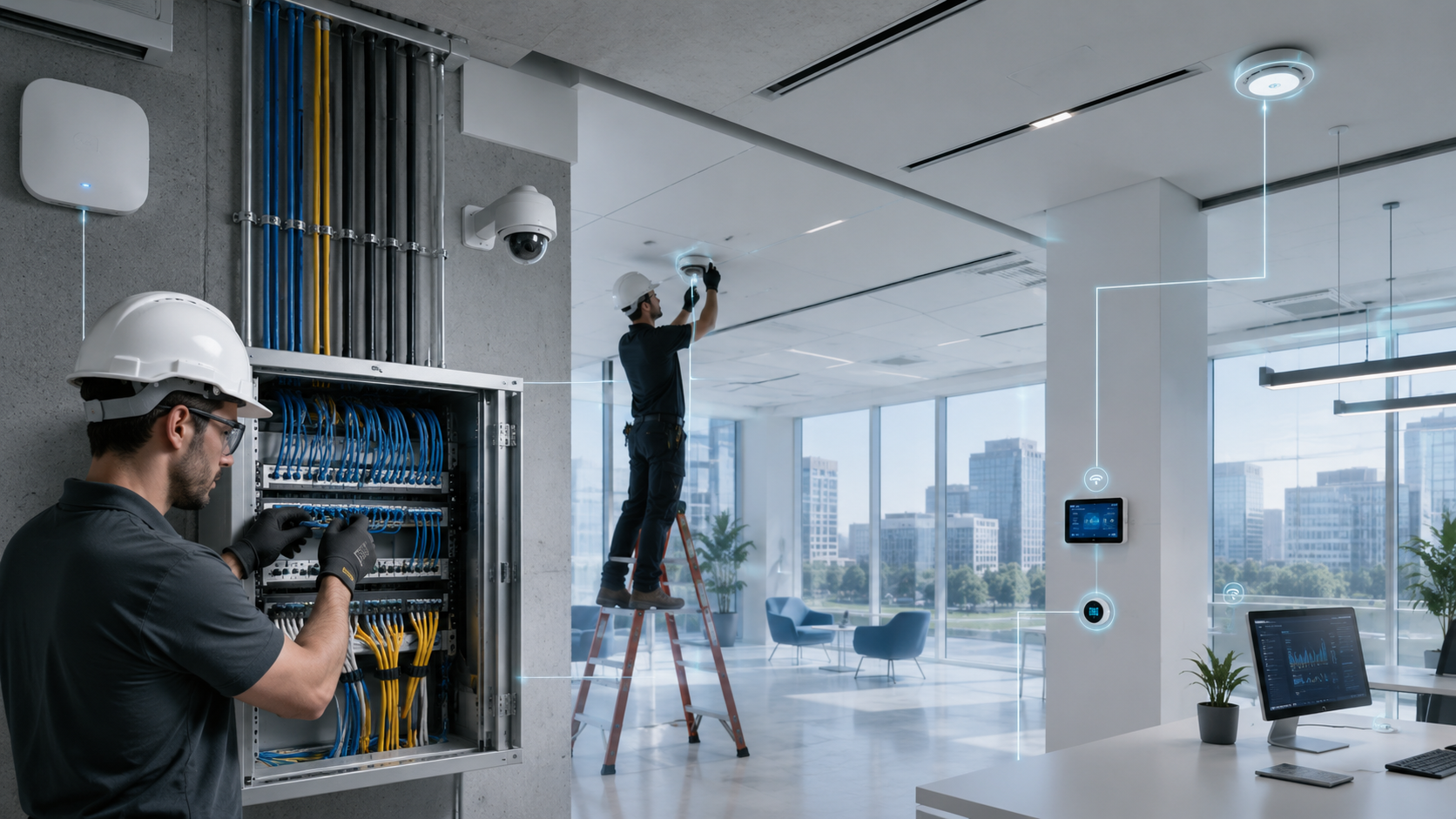
The next generation of commercial real estate is no longer defined solely by architecture—it is increasingly powered by intelligent digital infrastructure. From AI-powered climate control systems to occupancy sensors, smart lighting, biometric security, predictive maintenance platforms, and connected conference rooms, modern buildings now depend on thousands of interconnected Internet of Things (IoT) devices operating simultaneously.
As enterprises continue investing heavily in digital transformation, one traditional networking practice is quickly reaching its limits: the conventional “home-run” cabling model.
Network engineers, structured cabling consultants, and intelligent building designers are instead embracing Zone Cabling Architecture, an increasingly popular approach that dramatically improves scalability, flexibility, and long-term operational efficiency.
For organizations planning new office developments, hospitals, airports, universities, manufacturing facilities, or mixed-use commercial campuses, zone cabling is rapidly becoming the preferred structured cabling strategy.
Why Traditional Home-Run Cabling No Longer Fits Smart Buildings
For decades, structured cabling relied on a straightforward approach.
Every workstation, wireless access point, camera, telephone, or building automation device received its own dedicated horizontal cable running directly back to a Telecommunications Room (TR).
While effective for traditional office environments, this architecture becomes increasingly inefficient when today’s buildings deploy:
- Thousands of occupancy sensors
- Environmental monitoring devices
- Smart HVAC controllers
- Connected LED lighting systems
- Biometric access readers
- AI-powered surveillance cameras
- Digital signage
- Indoor positioning systems
- Edge computing devices
- Wireless IoT gateways
Large commercial buildings may contain tens of thousands of connected endpoints, making continuous moves, adds, and changes (MACs) both expensive and disruptive.
What Is Zone Cabling Architecture?
Zone Cabling Architecture introduces intermediate connection points known as Consolidation Points (CPs) within horizontal ceiling spaces or accessible service zones.
Instead of pulling every cable back to the telecommunications room, installers first run permanent horizontal cabling to these strategically placed consolidation points.
From there, shorter modular cabling connects nearby IoT devices.
The result is a far more flexible physical network infrastructure that simplifies future upgrades and minimizes disruption.
This modular approach is especially valuable in dynamic workplaces where office layouts, collaboration spaces, and occupancy patterns frequently change.
Why Enterprises Are Adopting Zone Cabling
1. Lower Installation Costs
Running shorter endpoint cables significantly reduces labor hours.
Large office renovations no longer require pulling entirely new horizontal cabling back across the building.
Instead, technicians simply replace the shorter device connection while leaving the permanent backbone untouched.
2. Faster Office Reconfiguration
Modern workplaces constantly evolve.
Departments relocate.
Meeting rooms expand.
Open offices become hybrid workspaces.
With zone cabling, moving IoT devices often requires only replacing local patch cables rather than rewiring entire floors.
This dramatically reduces downtime.
3. Better Support for Massive IoT Deployments
Today’s intelligent buildings may deploy thousands of connected devices across:
- HVAC systems
- Security
- Fire detection
- Lighting controls
- Occupancy analytics
- Environmental monitoring
- Smart elevators
- Asset tracking
Zone cabling allows these deployments to expand without overwhelming centralized telecommunications rooms.
4. Reduced Ceiling Disruption
Traditional cable replacements often require removing large sections of suspended ceiling.
Zone cabling minimizes invasive construction because most changes occur locally within a nearby service zone.
This reduces disruption for occupied office environments, hospitals, schools, and hotels.
5. Improved Long-Term Infrastructure Investment
Permanent horizontal cabling often remains in place for well over a decade.
Only the shorter equipment cables require replacement as technology evolves.
This reduces lifecycle costs while improving return on infrastructure investment.
The Standards Driving Intelligent Building Design
As smart buildings become more complex, industry standards play a critical role in ensuring reliability, interoperability, and future scalability.
ANSI/BICSI 007
ANSI/BICSI 007 provides comprehensive best practices for designing intelligent building infrastructure.
The standard addresses:
- Building automation systems
- IoT integration
- Smart lighting
- Physical security
- Environmental monitoring
- Edge connectivity
- Network convergence
- Telecommunications infrastructure planning
Rather than treating systems independently, ANSI/BICSI 007 promotes a unified digital building ecosystem capable of supporting future technologies.
TIA-862 Structured Cabling Standard
The TIA-862 Structured Cabling Standard focuses specifically on telecommunications infrastructure for intelligent buildings.
It establishes guidance for:
- Building automation cabling
- Sensor connectivity
- Zone distribution
- Backbone integration
- Horizontal cabling
- Device connectivity
- Consolidation points
- Telecommunications spaces
Together with ANSI/BICSI 007, TIA-862 provides a robust framework for scalable smart-building deployments.
AI Is Accelerating Smart Building Adoption
Artificial intelligence is dramatically increasing demand for connected building infrastructure.
Modern AI platforms continuously analyze data generated from thousands of sensors to optimize:
- Energy efficiency
- Occupancy utilization
- Predictive maintenance
- Indoor air quality
- Security monitoring
- Equipment performance
- Space optimization
Without flexible physical infrastructure such as zone cabling, scaling these intelligent systems becomes increasingly difficult.
Industries Benefiting Most
Zone Cabling Architecture is gaining momentum across numerous sectors.
Commercial Office Towers
Hybrid work environments require frequent office redesigns and workstation relocation.
Healthcare Facilities
Hospitals depend on rapidly expanding networks of connected medical devices, patient monitoring systems, and building automation technologies.
Manufacturing
Industrial IoT sensors continuously monitor machinery, environmental conditions, and production efficiency.
Education
Universities increasingly deploy connected classrooms, digital signage, security cameras, and occupancy analytics.
Airports and Transportation
Large transportation hubs require flexible infrastructure supporting surveillance, passenger information systems, environmental controls, and security technologies.
Data Centers
Supporting facilities increasingly integrate smart environmental monitoring, intelligent cooling systems, and AI-driven infrastructure management.
Sustainability Benefits
Environmental sustainability has become a major driver of intelligent building investments.
Zone cabling contributes by:
- Reducing cable waste
- Minimizing replacement materials
- Supporting energy optimization systems
- Extending infrastructure lifespan
- Lowering renovation-related construction waste
Combined with AI-driven building automation, these efficiencies help organizations meet ambitious ESG and carbon reduction goals.
Future Outlook
Analysts expect the number of connected IoT devices installed within commercial buildings to continue climbing rapidly over the coming decade.
As organizations deploy increasingly sophisticated AI-powered building management systems, physical infrastructure flexibility will become just as important as network bandwidth.
Zone Cabling Architecture provides a future-ready foundation capable of supporting continuous technological evolution while reducing maintenance costs and operational disruption.
For architects, systems integrators, structured cabling professionals, and enterprise IT leaders, adopting standards-based zone cabling is becoming less of an option and more of a strategic necessity.
Key Takeaways
- Zone Cabling Architecture is replacing traditional home-run cabling in many modern commercial buildings.
- Consolidation Points (CPs) reduce installation costs and simplify network modifications.
- ANSI/BICSI 007 and TIA-862 define best practices for intelligent building infrastructure.
- AI, IoT, and building automation are accelerating demand for flexible structured cabling.
- Smart buildings benefit from improved scalability, lower lifecycle costs, and greater operational efficiency through standards-based cabling design.
FAQ
What is Zone Cabling Architecture?
Zone Cabling Architecture is a structured cabling approach that uses consolidation points between telecommunications rooms and endpoint devices, allowing easier moves, adds, and changes while reducing installation complexity.
Why are smart buildings using zone cabling?
Smart buildings often contain thousands of IoT devices that require flexible, scalable infrastructure. Zone cabling reduces labor costs, simplifies renovations, and supports rapid device deployment.
What is ANSI/BICSI 007?
ANSI/BICSI 007 is an industry standard that provides best practices for designing intelligent building infrastructure, including IoT integration, building automation, and telecommunications systems.
What is TIA-862?
TIA-862 is a structured cabling standard that specifies telecommunications infrastructure requirements for smart and intelligent buildings, supporting building automation and IoT connectivity.
What are the benefits of consolidation points?
Consolidation points reduce cable lengths to endpoint devices, lower installation costs, simplify maintenance, minimize ceiling work, and improve flexibility during office reconfigurations.