CNETLABS — The rapid expansion of smart city infrastructure, AI-powered connectivity, and nationwide broadband projects is fundamentally changing how telecommunications networks are built beneath our streets.
Responding to these evolving demands, the ANSI/BICSI G3-2026 (Outside Plant: Underground Facilities) standard introduces comprehensive updates that redefine modern underground fiber deployment. For contractors, municipalities, telecommunications providers, engineering firms, and infrastructure investors, the revised standard represents one of the most significant Outside Plant (OSP) developments in recent years.
As governments continue investing billions into digital infrastructure while private operators race to expand fiber-to-the-home (FTTH) coverage, standardized installation practices have become increasingly essential for ensuring network longevity, resilience, and lower lifecycle costs.
Why ANSI/BICSI G3-2026 Matters
Outside Plant infrastructure forms the physical backbone of virtually every modern communications network.
The updated standard addresses challenges created by:
- Large-scale smart city deployments
- Massive rural broadband expansion
- Increased fiber density
- Growing demand for resilient underground infrastructure
- Climate-related environmental risks
- Aging municipal utility corridors
Unlike previous guidance, ANSI/BICSI G3-2026 places greater emphasis on designing underground pathways capable of supporting future generations of high-capacity fiber networks.
Modern Construction Techniques Receive Significant Updates
One of the biggest revisions involves construction methodologies that have rapidly gained popularity across broadband deployment projects.
The standard expands guidance surrounding:
Micro-Trenching
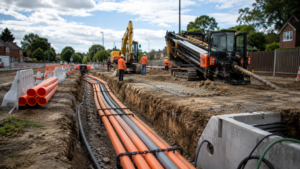
Micro-trenching allows contractors to install fiber rapidly while minimizing disruption to traffic, businesses, and existing utilities.
Updated recommendations include:
- Optimal trench dimensions
- Surface restoration practices
- Material selection
- Long-term durability considerations
- Utility conflict mitigation
These recommendations aim to reduce maintenance costs while improving installation consistency across municipalities.
Directional Drilling
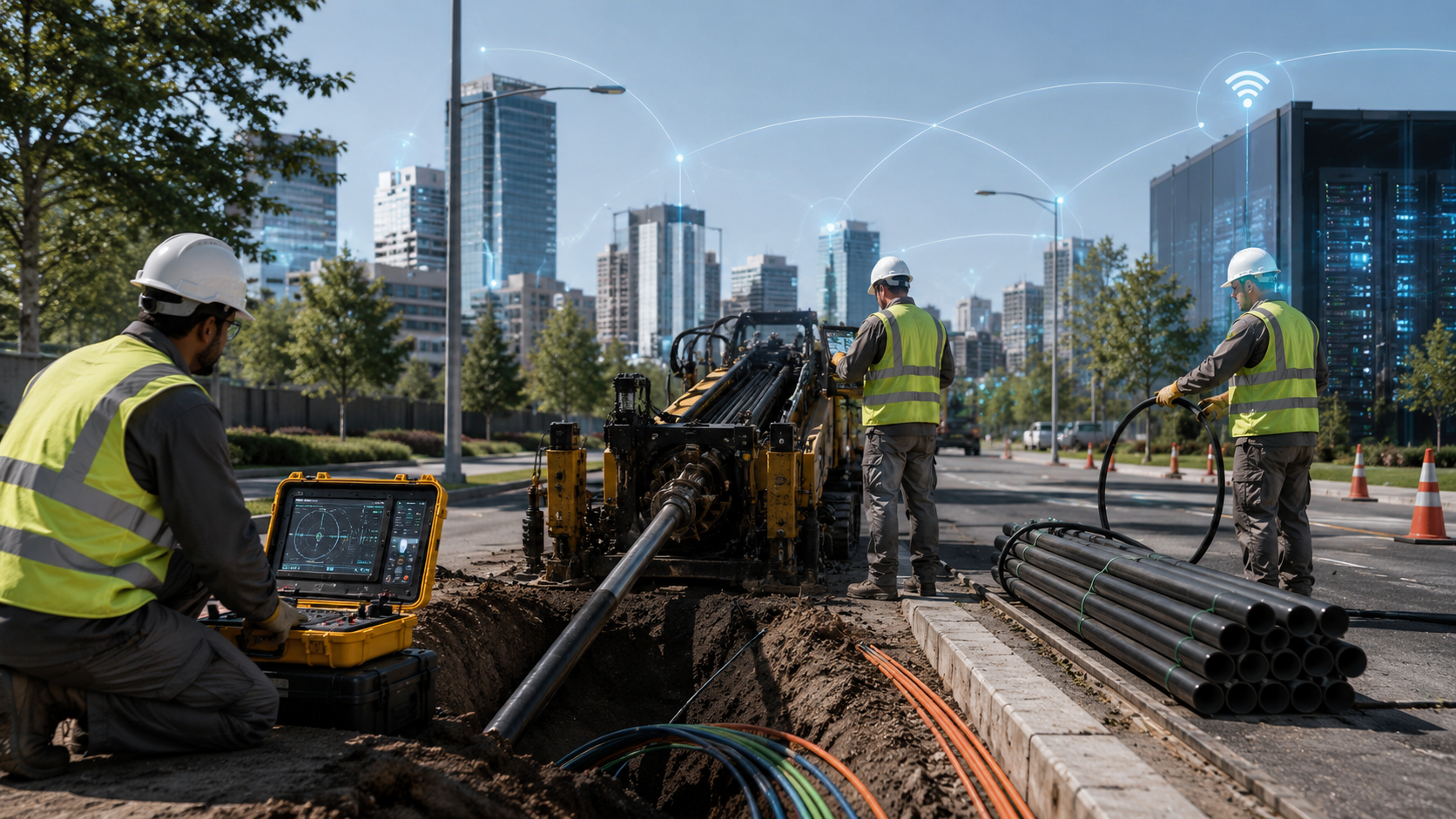
Horizontal directional drilling (HDD) continues to become the preferred installation method where open trenching is impractical.
ANSI/BICSI G3-2026 strengthens best practices involving:
- Bore planning
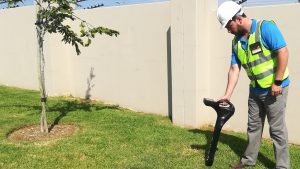
- Utility avoidance
- Drill fluid management
- Fiber conduit protection
- Environmental compliance
- Documentation requirements
These improvements help reduce accidental utility strikes while improving overall project safety.
Environmental Protection Takes Center Stage
Modern fiber infrastructure must withstand decades of environmental exposure.
The revised standard introduces updated recommendations addressing:
- Flood-prone areas
- Soil movement
- Freeze-thaw cycles
- Corrosion protection
- Water intrusion
- Conduit integrity
- Root intrusion
- Wildlife-related damage
As climate resilience becomes an increasingly important consideration for infrastructure owners, protecting underground assets has become just as important as installing them efficiently.
Smart Cities Are Driving New Deployment Requirements
Municipal governments worldwide continue investing in intelligent transportation systems, connected utilities, public Wi-Fi, surveillance infrastructure, and Internet of Things (IoT) deployments.
These initiatives require:
- Higher fiber counts
- Greater pathway flexibility
- Improved documentation
- Future expansion capacity
- Lower maintenance requirements
ANSI/BICSI G3-2026 provides engineering guidance intended to support these increasingly complex deployment environments.
Rural Broadband Expansion Creates New Challenges
Governments continue directing historic funding toward expanding broadband access into underserved communities.
Unlike dense urban installations, rural deployments frequently involve:
- Long conduit runs
- Challenging terrain
- Remote maintenance
- Limited technician availability
- Higher environmental exposure
The updated OSP guidance seeks to improve consistency across these large-scale infrastructure projects while reducing costly installation errors.
Physical Layer Failures Continue to Cost the Industry
Despite significant advances in networking equipment, industry data continues to show that approximately 70% of network outages originate within the physical layer rather than active electronics.
Common causes include:
- Improper connector installation
- Fiber damage
- Poor splicing
- Excessive bend radius
- Inadequate documentation
- Labeling errors
- Cable contamination
For organizations investing millions into broadband infrastructure, preventing these failures has become a major operational priority.
Certification Testing Receives Greater Attention
One of the strongest themes throughout the updated guidance is verification.
Every newly installed fiber link is increasingly expected to undergo comprehensive certification before being accepted into production.
Industry-leading certification processes commonly include:
- Optical loss testing
- Length verification
- Polarity validation
- Connector inspection
- Performance certification
- End-to-end documentation
Comprehensive testing significantly reduces future troubleshooting costs while improving customer satisfaction.
Fluke DSX Certification Remains an Industry Benchmark
Network owners continue placing greater emphasis on certification using advanced cable analyzers such as the Fluke DSX platform.
Comprehensive certification helps verify:
- Installation quality
- Performance compliance
- Warranty eligibility
- Contractor accountability
- Long-term reliability
As broadband funding programs increasingly require documented verification, certified testing has evolved from a recommended practice into a competitive necessity for many contractors.
ANSI/TIA-606-C Labeling Is Becoming Non-Negotiable
Accurate labeling remains one of the most overlooked aspects of network deployment.
ANSI/TIA-606-C compliance establishes standardized identification for:
- Fiber cables
- Patch panels
- Conduits
- Cabinets
- Cross-connects
- Equipment rooms
Proper labeling dramatically shortens troubleshooting times while simplifying future expansions and maintenance activities.
Addressing the Skilled Labor Shortage
The telecommunications industry continues facing an ongoing shortage of experienced OSP technicians.
Standardized installation procedures help organizations:
- Reduce training time
- Improve installation consistency
- Minimize costly rework
- Simplify quality assurance
- Accelerate broadband deployment
For infrastructure owners, standardized documentation also makes future maintenance less dependent on individual technicians.
Industry Impact
The release of ANSI/BICSI G3-2026 arrives during one of the largest global fiber construction cycles in history.
Key beneficiaries include:
- Telecommunications carriers
- Internet service providers
- Municipal broadband authorities
- Utility companies
- Smart city developers
- Engineering consultants
- Fiber contractors
- Infrastructure investment firms
- Data center operators
Organizations that align projects with the updated guidance are likely to improve deployment quality while reducing long-term operational risks.
What This Means for the Future
As fiber becomes the foundation for artificial intelligence infrastructure, autonomous transportation, edge computing, 5G backhaul, and next-generation smart cities, the importance of robust Outside Plant standards will only continue to grow.
ANSI/BICSI G3-2026 represents more than a technical revision—it reflects a broader industry shift toward resilient, standardized, and future-ready underground communications infrastructure. For contractors, engineers, municipalities, and broadband providers, adopting these updated best practices will be essential to building networks capable of supporting tomorrow’s digital economy.
Key Takeaways
- ANSI/BICSI G3-2026 modernizes underground Outside Plant construction standards.
- Updated guidance emphasizes micro-trenching and directional drilling best practices.
- Climate resilience and environmental protection receive greater attention.
- Smart city and rural broadband deployments are driving infrastructure modernization.
- Physical-layer failures continue to account for the majority of network outages.
- Comprehensive certification testing is increasingly expected on every fiber installation.
- ANSI/TIA-606-C labeling remains essential for efficient network management.
- Standardization helps address the telecommunications industry’s skilled labor shortage.
FAQ
What is ANSI/BICSI G3-2026?
ANSI/BICSI G3-2026 is an updated standard covering best practices for designing and constructing underground Outside Plant (OSP) telecommunications infrastructure, including pathways, conduits, micro-trenching, and directional drilling.
Why is the new BICSI OSP standard important?
It provides updated guidance that improves installation quality, network resilience, environmental protection, and long-term reliability while supporting expanding smart city and broadband initiatives.
What causes most fiber network outages?
Industry data indicates that many network outages originate from physical-layer issues such as damaged fiber, poor splicing, inadequate testing, improper labeling, or installation errors.
Why is Fluke DSX certification important?
Certification testing verifies that installed cabling meets required performance standards, helping reduce failures, simplify troubleshooting, and support warranty and compliance requirements.
What is ANSI/TIA-606-C?
ANSI/TIA-606-C is a telecommunications administration standard that defines labeling and documentation practices for cables, pathways, equipment, and network infrastructure to improve maintenance and asset management.